Plumbing · Edison, NJ
Plumbers start with a camera inspection so the right nozzle and pressure match the pipe on site. Debris stays at the access point instead of moving farther into the municipal system.
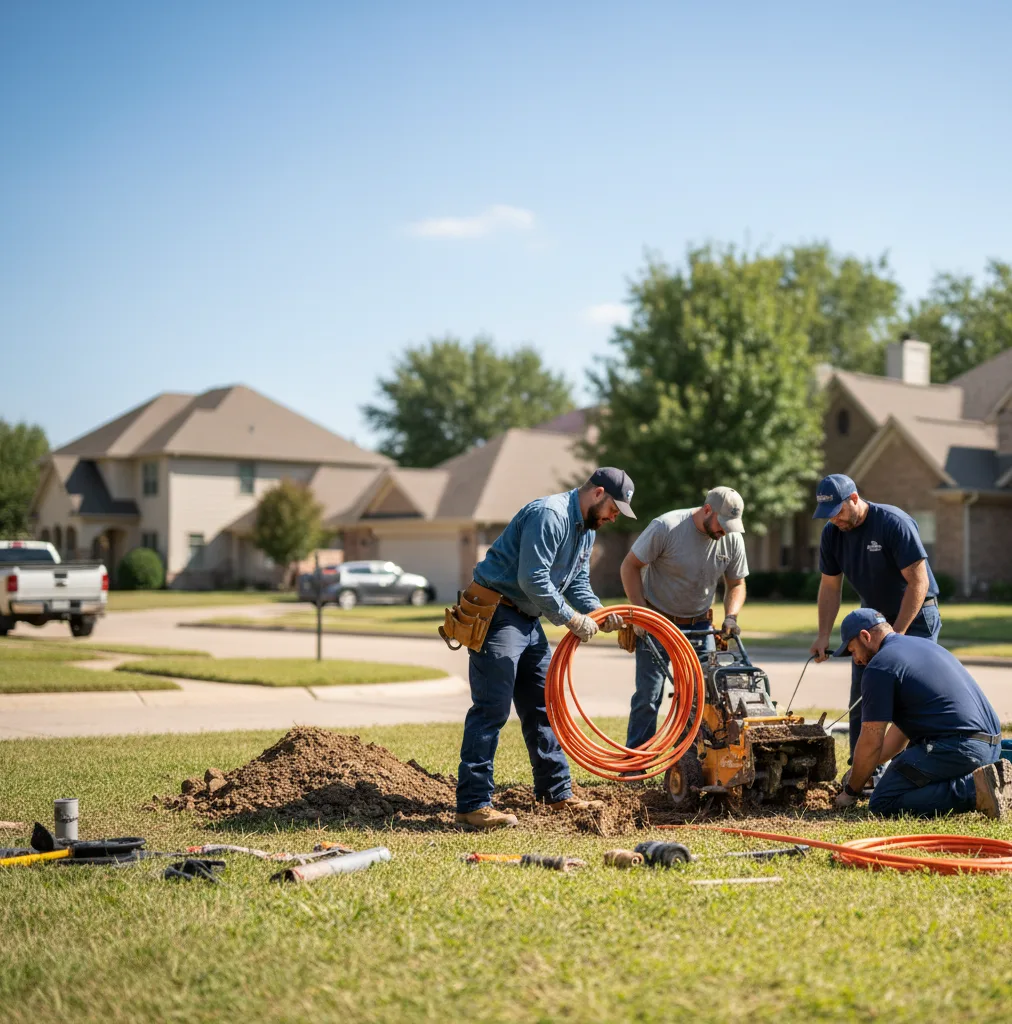
Hydrojetting handles cases where standard drain cleaning only opens a short path through compacted material. Technicians run a camera first to check length, diameter, and pipe material. Then a hose with forward and rear-facing nozzles goes in. Water pressure fractures roots and breaks up old grease while the rear jets push the hose forward. Debris washes back to the access point. This works on both cast-iron and PVC lines found in older areas and newer subdivisions. Homeowners often see slow drains on several fixtures at once or gurgling at the lowest drain. A follow-up camera check shows whether the pipe is clear enough or if sewer line repair is needed next.
Kitchen lines collect cooking fats that harden farther down once the water cools. Bathroom lines gather hair and soap scum that slowly narrows the pipe. Roots outside find small joints and grow inside. A camera survey spots each problem so the right nozzle and pressure get picked before starting.
The ground under any property shapes how drainage lines settle and whether they develop stubborn buildup over the years. Hydrojetting clears those lines using only pressurized water, so it adapts to whatever the site presents. Edison sits on sandy loam.
Water that flows through the pipes carries minerals that collect on the interior walls, and the rate of that collection varies by supply. Hydrojetting restores full flow without the need to replace sections of pipe. Edison receives moderately hard water from the supply.
Weather cycles affect how often leaves, grease, and other debris reach the main lines, yet the same high-pressure method handles the resulting clogs in every season. Edison experiences warm summers and cold winters, around 28 inches of snow a year, and 109 nights below freezing. The process stays effective because it relies on force rather than temperature or soil reactions.
FAQ

Most units have an accessible dial or digital control. Lowering the setting a few degrees can reduce energy use, but turning it too high risks scalding and added wear on components. Always turn off power or gas before adjusting internal parts, and verify the pressure relief valve still operates afterward. If you are unsure about the procedure, have a technician demonstrate the correct steps during a service visit.
Popping or rumbling usually comes from steam bubbles moving through sediment that has settled at the bottom of the tank. Over time this layer insulates the water from the heat source and forces the burner or element to work harder. Flushing the tank removes much of the sediment, though heavy buildup may require more than one flush or a professional cleaning. If the noise continues after flushing, the anode rod or heating components may also need attention.
Age is the first factor. Most residential tanks last ten to fifteen years. Visible rust on the exterior, repeated leaks, or water that stays warm only briefly are signs the tank itself is failing. When repair costs approach half the price of a new unit, replacement is usually the better long-term choice. We check the model number and condition on site before giving a recommendation.
Water Heater Repair & Plumber across Edison, NJ. Call (970) 528-5707.
Call (970) 528-5707